Structural Thinking
  • Home
  • About
  • Research
  • Publications
  • Media
image
Structural Thinking
The Structural Thinking Research Initiative is an interdisciplinary effort with two core missions: to understand how thinking emerges from structure across biological, human, and artificial systems, and to guide the design of the emerging Agentic Mesh—a world of interconnected thinking systems. By bringing together insights from cognitive science, biology, systems theory, artificial intelligence, and the social sciences, the initiative seeks to establish the principles for building more capable, adaptive, and responsible thinking structures. ​

What Is Structural Thinking?

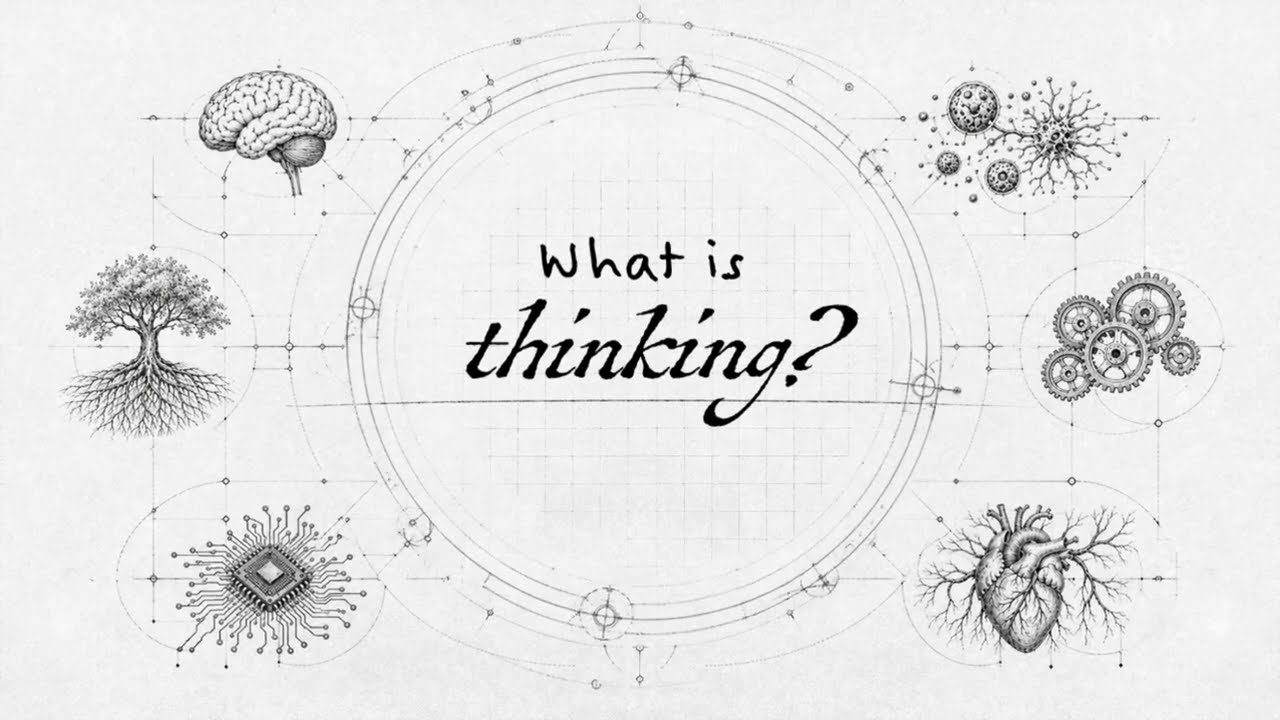
What if thinking is something structure can produce? Watch this short introduction to the framework and its implications for humans, organizations, and AI.
Video can’t be displayed

A New Definition of Thinking

Structural Thinking proposes that thinking happens when learning occurs within internal differentiation and delayed resolution, such that learning reshapes action before output. It offers a common framework for studying biological systems, humans, organizations, artificial intelligence, and systems formed by humans and machines together.

Structural Thinking

William Ammerman | October 2026 | Draft 1 The foundational white paper proposes a structural definition of thinking, introduces the five-dimensional Structural Thinking Profile, and outlines an interdisciplinary program to test the theory and instrument.

A Structural Account of Thinking Across Scales and Substrates

image
Suggested Citation: Ammerman, W. (2026). Structural Thinking: A Structural Account of Thinking Across Scales and Substrates. Technical Report ST-2026-01. Chapel Hill, NC: University of North Carolina at Chapel Hill, Structural Thinking Research Initiative.

A Research Program Open to Inquiry

The Initiative seeks to develop, test, challenge, and refine Structural Thinking. Our research asks which structural conditions enable thinking, how they can be measured, and how they change when humans and AI work together.
Explore the Research
Home | About | Research | Publications | Media  Contact: wamm@unc.edu | X: @wammerman LinkedIn: William Ammerman  © 2026 William Ammerman. All rights reserved.

We use cookies to enable essential functionality on our website and analyze website traffic. For more information, read our Cookies and Privacy Policy.

Your Cookie Settings

We use cookies to enable essential functionality on our website and analyze website traffic. For more information, read our Cookies and Privacy Policy.

Cookie Categories
Essential

These cookies are strictly necessary to provide you with services available through our websites.

Analytics

These cookies collect information that is used in aggregate and in an anonymized form to help us understand how our website is being used and how effectively our site is performing.